

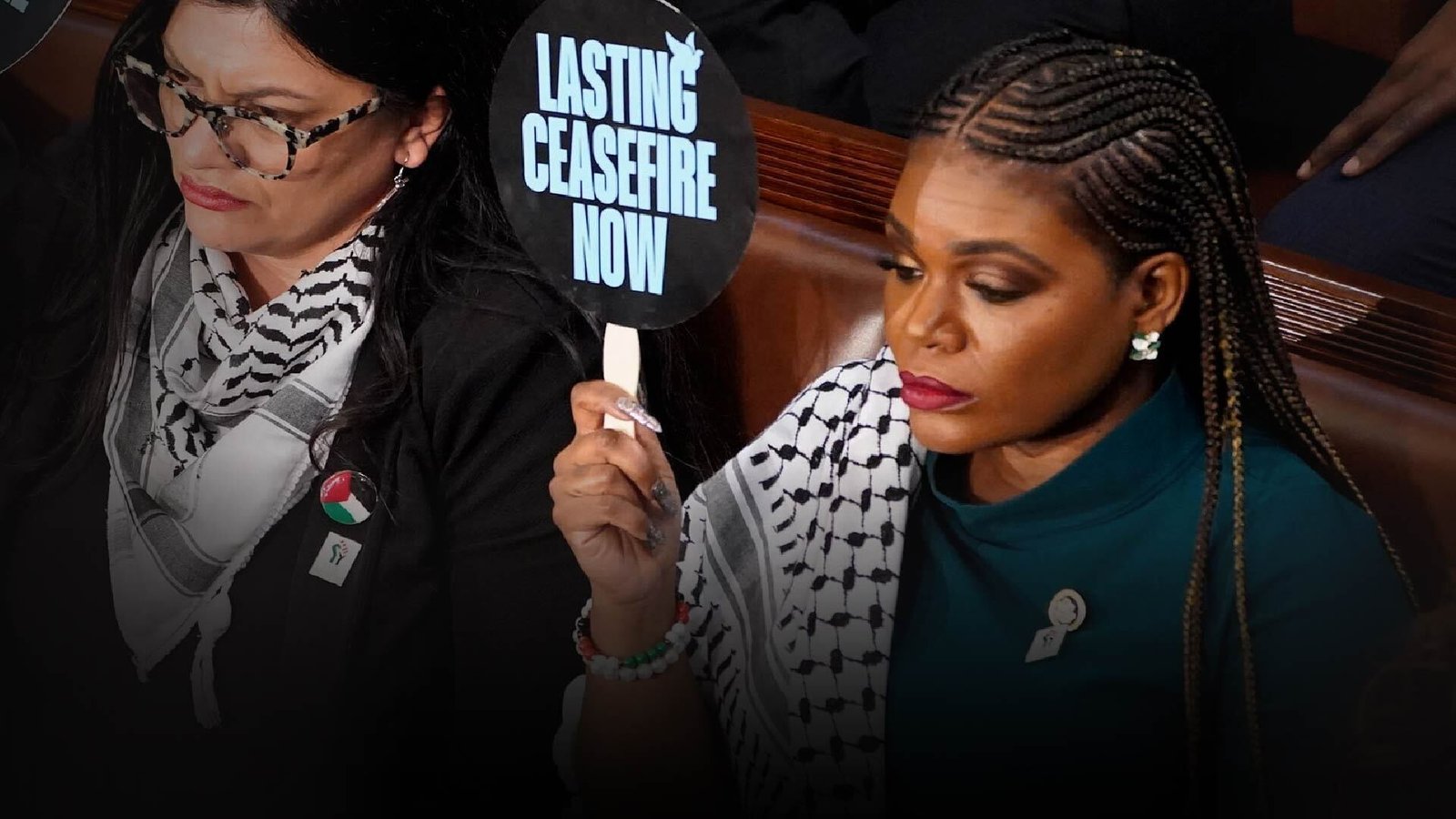
As the United States election campaign reaches its pivotal phase against the backdrop of the ongoing conflict in Gaza, various American politicians are intensifying their criticism of the administration’s unwavering support for Israel. Among these legislators is Congresswoman Cori Bush, who has emerged as a prominent voice advocating for Palestinian rights, publicly denouncing Israeli Prime Minister Benjamin Netanyahu as a war criminal. Notably, Bush expressed her opposition to Netanyahu’s address to the US Congress in July, marking a significant stand that underscores her commitment to humanitarian issues.
However, the landscape of American politics is complex, and controversy surrounds the implications of her stance. In a notable development, Bush faced a significant electoral challenge in September, losing her primary in what has been characterized as the second most expensive House of Representatives race in US history. Her opponent, fellow Democrat Wesley Bell, garnered substantial support from the American Israel Public Affairs Committee (AIPAC), a lobbying organization known for its pro-Israel advocacy.
Bush’s defeat raises critical questions about the potential consequences of dissent within the Democratic Party regarding foreign policy, particularly concerning the Israeli-Palestinian conflict. As anti-war sentiments and calls for Palestinian liberation resonate with various constituencies, the extent to which such positions can be navigated within the electoral landscape remains an area of active discussion.
This week, in an episode of UpFront, host Marc Lamont Hill engages Bush on the implications of the November 5 elections, diving deep into issues surrounding Palestinian liberation and the influence of the pro-Israel lobby in American politics. The conversation highlights the necessity for dialogue and understanding of diverse perspectives within the broader narrative on the Israeli-Palestinian conflict and its reverberations in domestic politics.
As the political arena evolves, it remains crucial to further examine and understand the intersections of policy, activism, and public sentiment that shape the electoral process and impact the lives of many.
#Politics #WorldNews